<?xml version="1.0" encoding="utf-8"?>
<feed xmlns="http://www.w3.org/2005/Atom" xmlns:media="http://search.yahoo.com/mrss/">
    <title>Joshua Wee Siong Tan</title>
    <link href="https://weesiongtan.com/feed.xml" rel="self" />
    <link href="https://weesiongtan.com" />
    <updated>2026-08-27T15:38:46+08:00</updated>
    <author>
        <name>Joshua Wee Siong Tan</name>
    </author>
    <id>https://weesiongtan.com</id>

    <entry>
        <title>Unpause Your God-Given Journey</title>
        <author>
            <name>Joshua Wee Siong Tan</name>
        </author>
        <link href="https://weesiongtan.com/unpause-your-god-given-journey.html"/>
        <id>https://weesiongtan.com/unpause-your-god-given-journey.html</id>
        <media:content url="https://weesiongtan.com/media/posts/7/unpause-01.jpg" medium="image" />
            <category term="Never Give Up"/>
            <category term="Life Journey"/>
            <category term="Keep Going"/>
            <category term="God-Given Journey"/>

        <updated>2026-08-27T15:38:46+08:00</updated>
            <summary type="html">
                <![CDATA[
                        <img src="https://weesiongtan.com/media/posts/7/unpause-01.jpg" alt="" />
                    There was a time in my life when pangs of guilt would slam me like a runaway train. Whenever a particular relationship storyline was played out in a movie I was watching, I would cringe with guilt. Back when I was a new young Christian,&hellip;
                ]]>
            </summary>
        <content type="html">
            <![CDATA[
                    <p><img src="https://weesiongtan.com/media/posts/7/unpause-01.jpg" class="type:primaryImage" alt="" /></p>
                <p>There was a time in my life when pangs of guilt would slam me like a runaway train. Whenever a particular relationship storyline was played out in a movie I was watching, I would cringe with guilt. Back when I was a new young Christian, I was sold out for Jesus. But life happened and I felt disqualified to serve the Lord in ministry. I dropped out of seminary. I was in the wilderness.</p>
<p>Many years later, I was at home alone. In the stillness of the backyard, God spoke.</p>
<p>“You are forgiven,” the inner voice was clear. I knew what it was about. From then on, I never experienced guilt pangs anymore.</p>
<p>About six months later at that same spot, God spoke again, “Go back and finish what you started.” Without hesitation, I went back to seminary without even asking what God wanted me to do after that. All I wanted was to finish what I started.</p>
<p>So seminary happened and I felt led to continue after I graduated. I was so confident of securing admission that I submitted only one application overseas. When it was rejected, I was devastated! For two months I was groping in the dark. I couldn’t understand what was going on.</p>
<h2><strong>The Detours are the Path</strong></h2>
<p>Reluctantly, I had to push myself to move into full-time employment. During this time, many events happened, but one stood out. My father’s health was getting worse. His hospitalisations were getting more frequent and quicker in-between. In his final two months, he was in and out of hospital four times. My wife and I were going back to my hometown to visit him almost every weekend.</p>
<p>In that crucial time, my father said the sinner’s prayer. Had I been overseas then, I would not have been able to be at my father’s side in his final months. As a result, we had many precious conversations and treasured moments.</p>
<p><em>“Perhaps some detours aren’t detours at all. Perhaps they are actually the path.” ― Katherine Wolf</em></p>
<h2><strong>Unpause Your God-Given Journey</strong></h2>
<p>Meanwhile, I continued to apply overseas for further studies and scholarships. This time, I received two unconditional offers for admission. Eventually, the time came to pay the deposit or I would lose my place. Yet, none of my scholarship applications had been successful. What should I do next?</p>
<p>God brought my attention twice to Deuteronomy 1:6 “The Lord our God said to us at Horeb, ‘You have stayed long enough at this mountain.’” At that point, Moses and the Israelites had stayed at Horeb for about one year. God had already revealed Himself and entered a covenant with them. Finally, it was time for them to move to the promised land.</p>
<p>Similarly, it has been a year since I entered into a full-time work commitment. It would seem that God is telling me that I have “stayed long enough” and it’s time to make a move. Just as Moses and the Israelites had to move out in faith, I need to move out in faith.</p>
<p>As I made the decision to move, there was a huge burden lifted from my shoulders. I felt energetic and happy that after a year-long delay, I am able to move on.</p>
<p>What about you? Are you stuck in your God-given journey? Did life happen and somehow you got side-tracked? Is God calling out, ‘You have stayed long enough on this mountain’? If yes, unpause your God-given journey and take the leap of faith.</p>
<p>Copyright © 2024 Wee Siong Tan - All rights reserved.</p>
<p>This article was originally published under <em>Spotlight Malaysia</em>, <a href="https://ourdailybread.org/unpause-your-god-given-journey/" target="_blank" rel="noopener">ODB Malaysia</a></p>
            ]]>
        </content>
    </entry>
    <entry>
        <title>Walking the Last Miraculous Journey with Dad</title>
        <author>
            <name>Joshua Wee Siong Tan</name>
        </author>
        <link href="https://weesiongtan.com/walking-the-last-miraculous-journey-with-dad.html"/>
        <id>https://weesiongtan.com/walking-the-last-miraculous-journey-with-dad.html</id>
        <media:content url="https://weesiongtan.com/media/posts/6/last-journey-1.jpg" medium="image" />
            <category term="Last Journey"/>
            <category term="End of Life"/>
            <category term="Dad and Son"/>

        <updated>2026-08-27T15:36:41+08:00</updated>
            <summary type="html">
                <![CDATA[
                        <img src="https://weesiongtan.com/media/posts/6/last-journey-1.jpg" alt="" />
                    “Your father has only a few more months to live,” the specialist doctor told us privately. Despite my dad’s health having deteriorated for months, those dreaded words still stung! Long before the pandemic, I had felt the urge to reach out to my dad for&hellip;
                ]]>
            </summary>
        <content type="html">
            <![CDATA[
                    <p><img src="https://weesiongtan.com/media/posts/6/last-journey-1.jpg" class="type:primaryImage" alt="" /></p>
                <p>“Your father has only a few more months to live,” the specialist doctor told us privately. Despite my dad’s health having deteriorated for months, those dreaded words still stung!</p>
<p>Long before the pandemic, I had felt the urge to reach out to my dad for his salvation. Each time we went back to my hometown in Melaka, we would gather my folks to pray aloud for my parents’ well-being before we left. As the years passed, I had the opportunity to lead my mother in prayer to invite Jesus into her heart. Nevertheless, the situation was different with my dad.</p>
<p>For my dad, going in and out of the hospital was becoming more frequent between admissions. This time, upon being discharged and reaching home, he complained of breathing difficulties. Immediately, he was sent to the hospital for the second time. A strong inner feeling pushed me to arrange a fellow believer to visit him regularly since we live in different states.</p>
<p>That weekend, I went back to see my dad and introduced a friend who is a pastor. Surprisingly, he was open as the pastor shared Psalm 121 and played him a Hokkien Christian song on YouTube.</p>
<p>The following Monday, my heart skipped a few beats when I received a call from the hospital. The nurse told me that my dad was complaining and quickly passed the phone to him.</p>
<p>“Where is everybody? Why is no one visiting me? I’m going to die soon!” my dad wailed.</p>
<p>I reminded him that I had visited him two days ago but to no avail. In that opportune moment, I asked him, “When the time comes, I know where I am going. When the time comes, do you know where you are going?”</p>
<p>That intense conversation turned into a little argument.</p>
<p>“What is there for you to lose to accept Jesus? You don’t lose anything by accepting him but there’s everything to gain!” I said.</p>
<p>After a while, the conversation trailed off and ended with me saying I would see him again the next time I’m back in Melaka.</p>
<p>The next day I received a surprise message from my pastor friend: <em>Hi Joshua, just visited your dad and he accepted Jesus into his life and followed me as I led him in the sinner’s prayer. I asked him, “Do you want to invite Jesus into your life and let him be your Lord and Saviour?” He said, “Why not?”</em></p>
<p>What an amazing turn of events! It reminded me of the time when Jesus turned water into wine (John 2:1-12). For one planted the seed, another watered it, but God gave the increase (1 Corinthians 3:6-7). Keep sowing and keep watering, for we never know when the harvest will come.</p>
<h2><strong>Reflections on Journeying with Ageing Parents</strong></h2>
<p>The frequent trips back to Melaka have taught me a few lessons:</p>
<p><strong>Do the small stuff.</strong> In his condition, my dad can’t do the little things anymore, like shaving. So I did it for him when I could. It was effortless for me, but such acts touched him deeply. It feels good to be clean-shaven! Doubtless, they were precious father-son time for us.</p>
<p><strong>Do it even when they say, “No need!”</strong> Parents don’t want their children to spend unnecessarily. But often, the things we want to buy are necessary for them. For the longest time, my mother refused a walking aid. Nonetheless, I went ahead and bought her a walking frame for indoor use and a four-legged stick for outdoor use. Now, she is happy using them both.</p>
<p><strong>Do the big stuff.</strong> With my dad’s declining condition, it was no longer feasible for my mother and sister to care for him. Accompanied by my wife, I drove my out-of-town eldest brother around Melaka looking for a suitable nursing home. When making such decisions, take note that it is their last journey, so make it as comfortable as possible for them.</p>
<p><strong>Do care-giving as a team.</strong> All of us siblings and some of our spouses were involved in caring for our elderly parents in one way or another. A few of us took turns to visit, especially those who live near enough. Even if travel is costly, remember that there is no substitute for your presence.</p>
<p>While everyone may have perfectly valid reasons for not going back often to visit their ailing parents, our time and presence matters to them. If there’s one thing I learnt, it’s that old age can be filled with so much boredom, especially if they are no longer mobile or suffering with pain.</p>
<p>Yes, time is precious for busy city dwellers. But our gift of time and presence is even more significant for folks who know their end is near. For them, everyday is a vicious cycle of endless inactivity. No wonder our old folks crave our love and presence. They just don’t say it out loud until it’s too late.</p>
<p>Remember to take time to engage with them, make amends and do what is right while they are still alert and able to communicate well. Do not take for granted that there will be another day to do it. Your presence makes a difference, and say to them often, “I love you!”</p>
<p>Copyright © 2024 Wee Siong Tan - All rights reserved.</p>
<p>This article was originally published under <em>Spotlight Malaysia</em>, <a href="https://ourdailybread.org/spotlight-malaysia/walking-the-last-miraculous-journey-with-dad/" target="_blank" rel="noopener">ODB Malaysia</a></p>
            ]]>
        </content>
    </entry>
    <entry>
        <title>Rising Up From Life’s Failures</title>
        <author>
            <name>Joshua Wee Siong Tan</name>
        </author>
        <link href="https://weesiongtan.com/rising-up-from-lifes-failures.html"/>
        <id>https://weesiongtan.com/rising-up-from-lifes-failures.html</id>
        <media:content url="https://weesiongtan.com/media/posts/5/rising-1.jpg" medium="image" />
            <category term="Second Chance"/>
            <category term="Rising Up"/>
            <category term="Failure"/>

        <updated>2026-08-27T15:33:46+08:00</updated>
            <summary type="html">
                <![CDATA[
                        <img src="https://weesiongtan.com/media/posts/5/rising-1.jpg" alt="" />
                    With multitudes of self-improvement books, TED talks, get-rich-quick seminars, online success stories and the like, now everyone can be rich and successful… not! Oftentimes, success stories glorify the end results rather than the unseen arduous process of getting there. We are told to maintain our&hellip;
                ]]>
            </summary>
        <content type="html">
            <![CDATA[
                    <p><img src="https://weesiongtan.com/media/posts/5/rising-1.jpg" class="type:primaryImage" alt="" /></p>
                <p>With multitudes of self-improvement books, TED talks, get-rich-quick seminars, online success stories and the like, now everyone can be rich and successful… not!</p>
<p>Oftentimes, success stories glorify the end results rather than the unseen arduous process of getting there. We are told to maintain our positive thinking and don’t give up. But while being positive has its benefits, often it is not sufficient.</p>
<p>So, what happens when the business start-up sinks, the marriage breaks down, and bankruptcy knocks on the door, or worse, all three come at once? Is one doomed for unrecoverable failure? Can one survive from such a crash?</p>
<h2>Two ways to go</h2>
<p>Jesus had two disciples who crashed badly. What is significant is that each one moved in the opposite direction. No one knows for sure why Judas Iscariot betrayed Jesus (Mark 14:10).</p>
<p>After Jesus was condemned to be executed, Judas realised what a tragic mistake he had made. Judas could not find forgiveness for himself, much less repent and seek forgiveness from Jesus. In his despair, he went away and hung himself (Matthew 27:3-5).</p>
<p>Similarly, Peter had betrayed Jesus when he disowned his Lord three times. When the cock crowed, Peter recalled what Jesus had prophesied earlier (Matthew 26:34). Peter went away grief-stricken and wept bitterly.</p>
<p>After Jesus was crucified, Peter and a few of the disciples went back to fishing. The resurrected Christ called out to them from the shore (John 21:1-14). When they reached Jesus, there was already a fire with fish being grilled.</p>
<h2>Peter’s encounter with Jesus</h2>
<p>At the fire, Jesus looked at Peter (John 21:15-17).</p>
<p>“Peter, do you love me?”</p>
<p>Peter looked away guiltily and replied, “You know everything, Lord. You know that I love you.”</p>
<p>“Feed my lambs.”</p>
<p>With just three words, Jesus reinstates Peter.</p>
<p>It must have been cuttingly painful for Peter to admit his betrayal. Yet, he could not escape the loving confrontation of his Rabbi. Just as Peter denied Jesus three times, in return his Lord asked him three times, “Do you love me?” Not that Jesus needed the assurance. Rather, the probing was for Peter. Peter’s three denials required three reaffirmations of love.</p>
<p>Inwardly, Peter needed to admit his guilt and failures before real healing could happen. Outwardly, Peter needed to respond to his Lord’s correction for reconciliation to begin. By reaffirming his love and loyalty to Jesus, restoration began to germinate from the cracks of defeat.</p>
<h2>The difference between Peter and Judas</h2>
<p>Actually, both Judas Iscariot and Peter crashed abysmally. But how each of them responded was a great contrast. One withdrew from others and turned inwardly to himself. The other was open to the Lord calling to him from the shore.</p>
<p>One rejects forgiveness from God and from himself. Another was open to receive forgiveness from Jesus, which gave him the ability to forgive himself. One chose death. The other chose life.</p>
<p>When we encounter failures in our careers, businesses, relationships, finances, or any other area in life, which path we choose can determine whether we sink to destruction or rise to restoration.</p>
<p>Just like Peter, we need to be honest inwardly and admit our failures. Outwardly, we need to reach out for help for an authentic audit of our lives in order for recovery and renewal to take place. Upwardly, we need to call out to God to lift us up so we can rise from the ashes of life’s failures.</p>
<p>Copyright © 2024 Wee Siong Tan - All rights reserved.</p>
<p>This article was originally published under <em>Spotlight Malaysia</em>, <a href="https://ourdailybread.org/spotlight-malaysia/rising-up-from-lifes-failures/" target="_blank" rel="noopener">ODB Malaysia</a></p>
            ]]>
        </content>
    </entry>
    <entry>
        <title>A Biblical View of Wealth Part 1: “Poverty Gospel”</title>
        <author>
            <name>Joshua Wee Siong Tan</name>
        </author>
        <link href="https://weesiongtan.com/a-biblical-view-of-wealth-part-1-poverty-gospel.html"/>
        <id>https://weesiongtan.com/a-biblical-view-of-wealth-part-1-poverty-gospel.html</id>
        <media:content url="https://weesiongtan.com/media/posts/4/pp-gospel-1.jpg" medium="image" />
            <category term="Poverty Gospel"/>

        <updated>2026-08-27T15:31:12+08:00</updated>
            <summary type="html">
                <![CDATA[
                        <img src="https://weesiongtan.com/media/posts/4/pp-gospel-1.jpg" alt="" />
                    Have you ever heard of the Poverty Gospel? It is a worldview which believes that being poor makes one holy, that wealth should be avoided because it is not healthy to one’s faith, or that having material possessions are inherently bad. It is not difficult&hellip;
                ]]>
            </summary>
        <content type="html">
            <![CDATA[
                    <p><img src="https://weesiongtan.com/media/posts/4/pp-gospel-1.jpg" class="type:primaryImage" alt="" /></p>
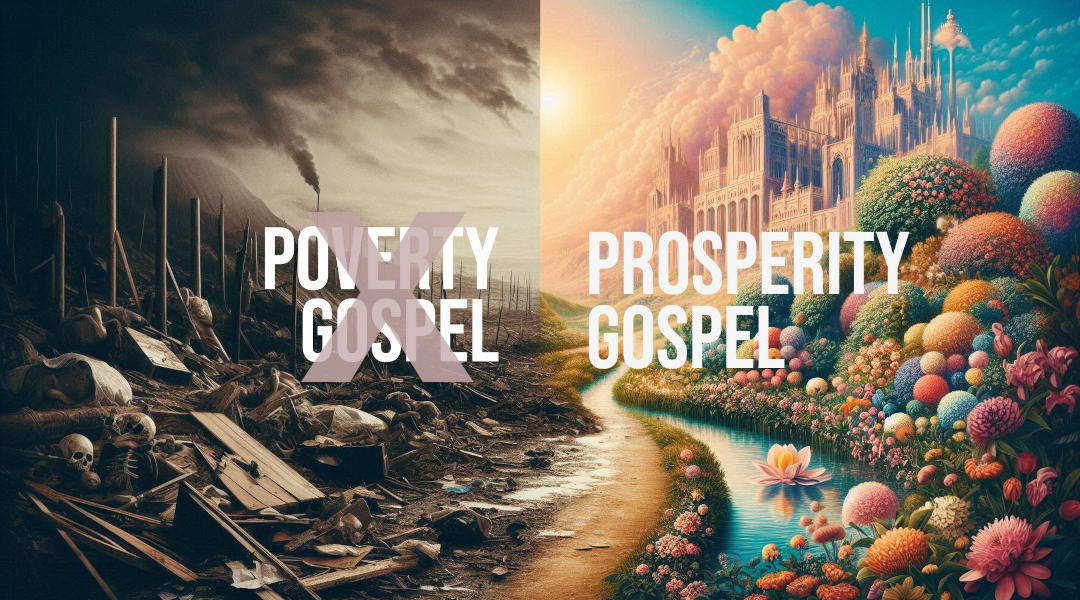
                <p>Have you ever heard of the Poverty Gospel? It is a worldview which believes that being poor makes one holy, that wealth should be avoided because it is not healthy to one’s faith, or that having material possessions are inherently bad.</p>
<p>It is not difficult to imagine how the term <em>filthy rich</em> comes about. For those who hold this view, “money is the root of all evil,” despite the fact that the actual verse says, “the <em>love</em>of money is a root of all kinds of evil” (<a href="https://www.biblegateway.com/passage/?search=1%20Timothy%206%3A10&amp;version=NIV">1 Timothy 6:10</a>, italics mine).</p>
<p>Hence, suffering is equated with sacrifice, and some choose this path as a way of denying themselves, picking up the cross and following Jesus (<a href="https://www.biblegateway.com/passage/?search=%20Matthew%2016%3A14&amp;version=NIV">Matthew 16:14</a>).</p>
<h2>Obedience is better than sacrifice</h2>
<p>Perhaps the right goal would be to wholeheartedly pursue and obey God. After all, <a href="https://www.biblegateway.com/passage/?search=1%20Samuel%2015%3A22&amp;version=MEV">1 Samuel 15:22</a> (MEV) states, “Obedience is better than sacrifice.” Interestingly, the rich young ruler was the only one Jesus told to sell all his goods and give to the poor (<a href="https://www.biblegateway.com/passage/?search=%20Matthew%2019%3A21&amp;version=NIV">Matthew 19:21</a>). Jesus did not say that to anyone else. As such, the requirement to sell everything one owns has no regular place in the Lord’s teaching.</p>
<p>How do we know that? <a href="https://www.biblegateway.com/passage/?search=%20Matthew%206%3A24&amp;version=NIV">Matthew 6:24</a> states, “No one can serve two masters… You cannot serve both God and money.” For the rich young ruler, it is clear who, or what was his master. Jesus was merely revealing to him what his stumbling block was.</p>
<p>Significantly, many of Jesus’s disciples were likely to be rich. Peter, James, and John would have used their own capital to purchase their own fishing boats. Wealthy women like Mary Magdalene, Joanna and Susanna supported Jesus and his disciples out of their own means. Joseph of Arimathea was wealthy enough to buy a new tomb, which he laid Jesus in after the crucifixion. For the disciples, it was clear that Jesus was their master.</p>
<p>Here we can do well to differentiate materialism from wealth. Materialism is the continual compulsion to define ourselves by what we already possess and also those things yet to be possessed. This means that just about anyone can be materialistic. Whether rich or poor, anyone can be enslaved by materialism.</p>
<h2>Blessed are the Poor in Spirit?</h2>
<p>Perhaps the term “poor in spirit” has been misunderstood by those who subscribe to the Poverty Gospel worldview. The phrase in the Beatitudes begins with, “Blessed are the poor in spirit, for theirs is the kingdom of heaven” (<a href="https://www.biblegateway.com/passage/?search=%20Matthew%205%3A3&amp;version=NIV">Matthew 5:3</a>). So what does “poor in spirit” actually mean? When we consider those who are financially poor, such images come to mind; <em>bankruptcy</em>, <em>powerlessness</em>, and <em>hunger</em>.</p>
<p>But when we shift our focus from financial poverty to spiritual poverty, we see that it refers to those who are <em>bankrupt</em> spiritually, <em>powerless</em> against the powers of darkness, and <em>hungry</em> for God. Only when one hungers for God, can one enter the kingdom of heaven.</p>
<p>It is not surprising then that Jesus often spoke against the Pharisees for their arrogant self-sufficiency, self-confidence and self-seeking ways. They have no need for God. Indeed, only those who are “poor in spirit” recognise their inability to earn their salvation and acknowledge their entire dependence on God.</p>
<h2>Using our talents for God’s glory</h2>
<p>Notably, Jesus has a story to tell about money. In the Parable of the Talents (<a href="https://www.biblegateway.com/passage/?search=%20Matthew%2025%3A14-30&amp;version=NIV" target="_blank" rel="noopener noreferrer">Matthew 25:14-30</a>), the master refers to God while the servants represent us. The word “talent” has been translated variously as money in English. However, “talents” can also refer to any kind of resources that God has given.</p>
<p>The parable teaches that faithful servants make good use of what is given, while wicked and lazy ones bury theirs – neglecting their responsibilities and perhaps thinking there would be no personal benefit from putting the talent to work. It is significant that Jesus used money to teach about stewardship.</p>
<p>The parable shows that there are those who are given much, and also those who are given little according to their abilities. When we view money as one of our many God-given resources, then our attitude towards wealth can change. When used wisely, wealth can be used for God’s glory.</p>
<p>Copyright © 2024 Wee Siong Tan - All rights reserved.</p>
<p>This article was originally published under <em>Spotlight Malaysia</em>, <a href="https://ourdailybread.org/spotlight-malaysia/a-biblical-view-of-wealth-part-1-poverty-gospel/" target="_blank" rel="noopener">ODB Malaysia</a></p>
            ]]>
        </content>
    </entry>
    <entry>
        <title>A Biblical View of Wealth Part 2: “Prosperity Gospel”</title>
        <author>
            <name>Joshua Wee Siong Tan</name>
        </author>
        <link href="https://weesiongtan.com/a-biblical-view-of-wealth-part-2-prosperity-gospel.html"/>
        <id>https://weesiongtan.com/a-biblical-view-of-wealth-part-2-prosperity-gospel.html</id>
        <media:content url="https://weesiongtan.com/media/posts/3/pp-gospel-2.jpg" medium="image" />
            <category term="Scott Wesley Brown"/>
            <category term="Prosperity Gospel"/>
            <category term="Biblical Wealth"/>

        <updated>2026-08-27T15:28:11+08:00</updated>
            <summary type="html">
                <![CDATA[
                        <img src="https://weesiongtan.com/media/posts/3/pp-gospel-2.jpg" alt="" />
                    Many Christians are familiar with the term “prosperity gospel”. But what exactly is it and does the Bible say anything about it? Following on from our Part 1 on poverty gospel, today I would like to invite you to look a little deeper at the&hellip;
                ]]>
            </summary>
        <content type="html">
            <![CDATA[
                    <p><img src="https://weesiongtan.com/media/posts/3/pp-gospel-2.jpg" class="type:primaryImage" alt="" /></p>
                <p>Many Christians are familiar with the term “prosperity gospel”. But what exactly is it and does the Bible say anything about it? Following on from our Part 1 on poverty gospel, today I would like to invite you to look a little deeper at the prosperity gospel.</p>
<h2>What is Prosperity Gospel?</h2>
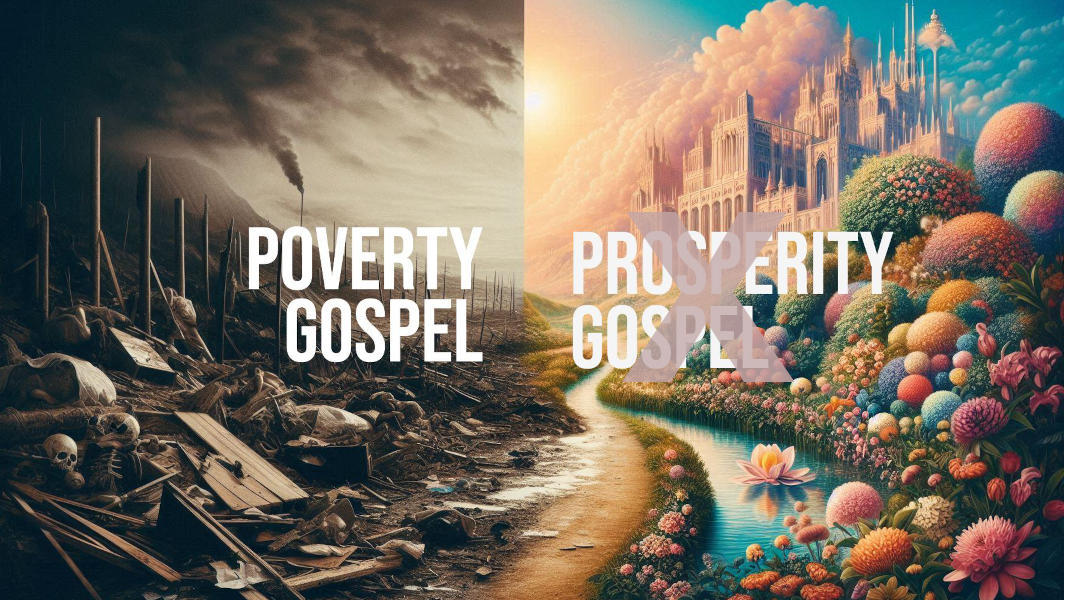
<p>The underlying worldview of the prosperity gospel is essentially this: God wants us to prosper financially, to have plenty of money and to fulfill the destiny He has laid out for us.</p>
<p>Additionally, the worldview uses the analogy of planting and harvesting in the so-called “hundredfold return”. Whatever a follower plants, be it faith, money, or any other “seed”, the follower can expect a hundredfold return! Many are led to believe that when they “sow” money in faith, they will receive back a hundredfold.</p>
<p>Notably, those who preach the prosperity gospel insist that in order to receive God’s financial blessings, their followers must first give money to God, that is, to invest into their ministries. Significantly, these preachers have also been listed as among the richest people in the world.</p>
<p>But is this belief biblical? Is material wealth what Jesus means when He says we will have “abundant life?”</p>
<h2>The Real Meaning of Hundredfold</h2>
<p>The prosperity gospel distorts the biblical gospel by claiming that the abundant life described in <a title="bible verses" href="https://www.biblegateway.com/passage/?search=John%2010%3A10&amp;version=NKJV" target="_blank" rel="noopener noreferrer">John 10:10 (NKJV)</a> means having big cars, big houses, and big job promotions. Nevertheless, the real abundant life of the gospel is really about eternal security for the soul. The prosperity gospel degrades God’s nature by teaching that God grants our wishes like a cosmic magic genie. It focuses on the gifts, rather than the giver. The gospel is about Jesus, but the prosperity gospel is devoid of Jesus!</p>
<p>What does hundredfold really mean? This word appears in the story of the rich young man who asked Jesus what he must do to inherit eternal life (<a title="bible verses" href="https://www.biblegateway.com/passage/?search=Matthew%2019%3A16-30&amp;version=NIV" target="_blank" rel="noopener noreferrer">Matthew 19:16-30</a>). At the end of the discussion, Jesus answered that if the young man wanted to be perfect, then sell all his possessions, give to the poor, and then come follow Jesus. The young man went away sad because he had great wealth.</p>
<p>Peter then proclaimed that they had left everything to follow Christ. Jesus replied that everyone who had left home or family for his sake would receive a hundredfold and inherit eternal life (v.29). Does that refer to a hundredfold of houses and properties, fathers and mothers, brothers and sisters, and children? Or the meaning of hundredfold is beyond the physical?</p>
<p>Significantly, the story is about a rich young man seeking eternal life (v.16), and Jesus’ reply at the end is also about eternal life (v.29). This suggests that the hundredfold refers to the spiritual family and kingdom of God. Furthermore, one inherits eternal life!<br> </p>
<h2>Reckless Giving</h2>
<p>In the Prosperity Gospel worldview, one is called to give, in order to get a hundredfold. Instead of self-serving giving, Jesus calls us to reckless giving! Jesus often called upon his disciples to be generous to those who cannot repay them.</p>
<p>Give to the one who asks you, and do not turn away from the one who wants to borrow from you. – Matthew 5:42</p>
<p>Give to everyone who asks you, and if anyone takes what belongs to you, do not demand it back. Do to others as you would have them do to you. – Luke 6:30</p>
<p>Let the words of a song by Scott Wesley Brown reminds us:</p>
<p>We’ve been blessed to be a blessing,</p>
<p>We’ve been loved to give His love.</p>
<p>Copyright © 2024 Wee Siong Tan - All rights reserved.</p>
<p>This article was originally published under <em>Spotlight Malaysia</em>, <a href="https://ourdailybread.org/spotlight-malaysia/a-biblical-view-of-wealth-part-2-prosperity-gospel/" target="_blank" rel="noopener">ODB Malaysia</a></p>
            ]]>
        </content>
    </entry>
    <entry>
        <title>How to Discern if Sensational News is Fake or Not</title>
        <author>
            <name>Joshua Wee Siong Tan</name>
        </author>
        <link href="https://weesiongtan.com/how-to-discern-if-sensational-news-is-fake-or-not.html"/>
        <id>https://weesiongtan.com/how-to-discern-if-sensational-news-is-fake-or-not.html</id>
        <media:content url="https://weesiongtan.com/media/posts/2/fake-news-02.jpg" medium="image" />
            <category term="Solomon"/>
            <category term="Sensational News"/>
            <category term="ODB Malaysia"/>
            <category term="Fake News"/>
            <category term="Discernment"/>

        <updated>2026-08-27T13:12:05+08:00</updated>
            <summary type="html">
                <![CDATA[
                        <img src="https://weesiongtan.com/media/posts/2/fake-news-02.jpg" alt="" />
                    In today’s highly connected world, we spend an inordinate amount of time online. Daily, we stumble upon all kinds of sensational news. Some may be true while others we find out later to be false. In our excitement, we may even have forwarded such sensational&hellip;
                ]]>
            </summary>
        <content type="html">
            <![CDATA[
                    <p><img src="https://weesiongtan.com/media/posts/2/fake-news-02.jpg" class="type:primaryImage" alt="" /></p>
                <p>In today’s highly connected world, we spend an inordinate amount of time online. Daily, we stumble upon all kinds of sensational news. Some may be true while others we find out later to be false. In our excitement, we may even have forwarded such sensational news to our circle of family and friends without realising that they are fake. Oops!</p>
<p>Unlike traditional print media which usually goes through the purview of fact-checkers and editors, a huge majority of online content is self-published. As such, almost anyone with online access can publish just about anything without going through the editorial process, such as personal blogs and lobbying sites. Therefore, a good guideline to follow is to take extra precautions when it comes to online content.</p>
<h2>Wise and Discerning Mind</h2>
<p>In <a title="bible verses" href="https://www.biblegateway.com/passage/?search=1%20Kings%203%3A16-28&amp;version=NIV" target="_blank" rel="noopener noreferrer">1 Kings 3:16-28</a>, there is a story about King Solomon hearing a case involving two prostitutes who each had just delivered a baby. One of the babies died. The mother of the dead baby swapped with the living one of the other prostitute. An argument ensued and the case was brought before the king. Solomon could not tell who was telling the truth, so he issued a shocking command to cut the baby in half and give one half to each woman.</p>
<p>In doing so, he was able to determine the baby’s true mother – it was the one who pleaded with him not to kill the boy, but give it to the other woman instead (v.26)! Here, King Solomon has provided us with a fine example of using a wise and discerning mind to determine what is fake and untrue.</p>
<p>In similar fashion, we can examine each piece of online news we read to discern if it is fake or not. Before forwarding or sharing anything online, it is good practice to do due diligence and verify the facts.</p>
<h2>Discerning Fake News</h2>
<p>While not all sensational news are fake, more often than not, fake news are purposely sensational. They are meant to trigger readers’ emotions so that the news becomes viral.</p>
<p>Whether we realise it or not, chances are we encounter fake news online on a regular basis. We may inadvertently click links on unsolicited emails which lead to fake news websites. In addition, with the ease of forwarding unverified stories on messengers such as WhatsApp, and reposting on social media like Facebook, sensational news goes viral quickly. If we are not careful, we get caught in the wave of fake news, and even help perpetrators by sharing and forwarding false information.</p>
<p>How do we guard ourselves against falling into the trap of fake news? There are many telltale signs to guide us:</p>
<ol>
<li>Watch out for photos that have been altered. Upload such suspicious photos to Google Images to determine if such images have been used previously in other contexts.</li>
<li>Just as images can be tampered with, the same applies to content. Articles may be repurposed to support a different context altogether through minor changes to the original text.</li>
<li>If an article uses the name of famous celebrities, wealthy tycoons, big corporations, top secret agencies, global organisations, big brands, important government ministries, even central banks, be extra careful! It is using the halo effect to influence and reinforce the reader’s acceptance of the article. The presence of big names lowers down one’s guard to be more open.</li>
<li>Often, fake news mixes truths with false information. With the help from search engines, it is easy enough to verify the source by searching for related articles or key search terms which correlate to the suspicious article. Sometimes putting the exact article title in the search box will bring up some surprising results.</li>
<li>For websites, take an overall look at the structure. Does it have an “About Us” section? Who owns the website? This may give us a clue on the purpose of the site.</li>
<li>What are the kinds of articles posted on the website? Is there a general theme? The overall “feel” may give us a hint of whether the article is authentic or not.</li>
<li>Are there too many ads distributed all over the page? If yes, that sounds like a site made just for generating ad income.</li>
</ol>
<p>Additionally, there are resources available to help us. There are many websites that cover internet hoaxes, urban legends, and questionable stories in various countries.</p>
<h2>To Share or Not To Share?</h2>
<p>What if we are too busy or not knowledgeable enough to verify the facts? Perhaps, we tried to investigate but could not find anything conclusive. Then, it is only sensible to refrain from forwarding sensational stories, no matter how tempting it is to do so. As <a title="bible verses" href="https://www.biblegateway.com/passage/?search=1%20Peter%205%3A8&amp;version=NIV" target="_blank" rel="noopener noreferrer">1 Peter 5:8</a> states, “Be sober-minded; be watchful. Your adversary the devil prowls around like a roaring lion, seeking someone to devour.” Perpetrators of fake news seek the unwary to devour.</p>
<p>Lastly, we should take heed to what the apostle Paul had admonished, “…be careful how you walk, not as unwise people but as wise… because the days are evil.”</p>
<p>Copyright © 2024 Wee Siong Tan - All rights reserved.</p>
<p>This article was originally published under <em>Spotlight Malaysia</em>, <a href="https://ourdailybread.org/spotlight-malaysia/how-to-discern-if-sensational-news-is-fake-or-not/" target="_blank" rel="noopener">ODB Malaysia</a></p>
            ]]>
        </content>
    </entry>
    <entry>
        <title>Breaking Hell’s Gate (破地獄): What Jesus Accomplished in Hades</title>
        <author>
            <name>Joshua Wee Siong Tan</name>
        </author>
        <link href="https://weesiongtan.com/breaking-hells-gate-po-di-yu-what-jesus-accomplished-in-hades.html"/>
        <id>https://weesiongtan.com/breaking-hells-gate-po-di-yu-what-jesus-accomplished-in-hades.html</id>
        <media:content url="https://weesiongtan.com/media/posts/1/breaking-hell-s-gate-a.jpg" medium="image" />
            <category term="破地獄"/>
            <category term="The Last Dance"/>
            <category term="Taoist funeral ritual"/>
            <category term="Origen"/>
            <category term="Hades"/>
            <category term="Gates of Hell"/>
            <category term="Early Church Fathers"/>
            <category term="Christ&#x27;s Descent into Hades"/>
            <category term="Breaking Hell’s Gate"/>

        <updated>2026-08-27T12:11:12+08:00</updated>
            <summary type="html">
                <![CDATA[
                        <img src="https://weesiongtan.com/media/posts/1/breaking-hell-s-gate-a.jpg" alt="" />
                    You may recall the recent blockbuster movie The Last Dance. Its Chinese title, 破地獄 (Breaking Hell’s Gate), references a Taoist funeral ritual where a priest symbolically breaks the gates of hell using a sword. The ritual aims to free the soul of the deceased, releasing it&hellip;
                ]]>
            </summary>
        <content type="html">
            <![CDATA[
                    <p><img src="https://weesiongtan.com/media/posts/1/breaking-hell-s-gate-a.jpg" class="type:primaryImage" alt="" /></p>
                <p>You may recall the recent blockbuster movie <em>The Last Dance</em>. Its Chinese title, <span lang="zh-CN">破地獄</span> (Breaking Hell’s Gate), references a Taoist funeral ritual where a priest symbolically breaks the gates of hell using a sword. The ritual aims to free the soul of the deceased, releasing it from torment and allowing it to reincarnate.</p>
<p>This imagery evokes a profound parallel: Have you ever considered what happened to Jesus between his death and resurrection? Why did he have to die, and what is the full significance of his resurrection? A key question often arises—what became of those who lived before Christ's earthly ministry? How could they be saved when Christ had not yet died for their sins?</p>
<h2>Jesus’ Descent into Hades: A Theological Perspective</h2>
<p>The early Church Father Origen provides insight into this mystery. He describes two descents of Christ: first, from heaven to earth in his incarnation, and second, from earth to Hades in his death. Jesus fully participated in the human experience by living and dying as a human, particularly in death. This second descent is crucial, as it allowed Christ to directly confront the powers of darkness.</p>
<p>Through his death, Jesus broke the gates of hell, overthrowing the devil who held the power of death (Hebrews 2:14-15). Before this act, all souls—whether righteous or unrighteous—descended into Hades. Even saints like Abraham, Samuel, and John the Baptist were held there, unable to enter paradise due to the curse of original sin. Christ’s descent shattered this barrier, liberating those enslaved by death and opening the way to eternal life.</p>
<h2>"The Gates of Hell shall not prevail against it”</h2>
<p>Jesus’ words to Peter in Matthew 16:18 take on new depth in this context: “... on this rock I will build my church, and the gates of hell shall not prevail against it.” This declaration signifies that the gates of hell—the symbolic stronghold of death and the devil—cannot withstand the redemptive work of Christ. Furthermore, the following verse mentions Jesus giving Peter the keys to the kingdom of heaven, not to hell. Why? Because Jesus had already broken hell’s gates and freed the captives... "the gates of hell shall not prevail against it."</p>
<h2>Binding the Strong Man and Liberating the Captives</h2>
<p>Within the imagery of the parable of the strong man (Matthew 12:29; cf. Colossians 2:14–15), Jesus binds the devil through His sacrificial death on the cross, disarming the powers and authorities of darkness. Following this victory, He descends into Hades to plunder the devil's "house," liberating those held captive by the power of death and sin. Christ led the captives out of Hades, fulfilling Psalm 68:18 and Ephesians 4:8, which alludes to Christ's ascension accompanied by those he liberated. When Jesus resurrected, he did not rise alone but brought with him the souls of the redeemed, as symbolized by the saints who rose and entered the holy city (Matthew 27:52-53).</p>
<h2>The Fulfillment of Christ’s Humanity and Divinity</h2>
<p>To fully identify with humanity, Christ had to experience death and Hades, as all humans do. Yet, to demonstrate his divinity, he overcame death and the devil, rising victoriously. This dual fulfillment underscores the comprehensive nature of his work. According to Origen, Jesus opened paradise for Old Testament saints and offered salvation to the dead in Hades who responded to his proclamation (1 Peter 3:18-20).</p>
<h2>Conclusion</h2>
<p>Jesus’ redemptive work extends beyond the two defining moments of His death and resurrection. What he accomplished in Hades during the interim is a central and often overlooked dimension of salvation history, demonstrating the fullness of his victory over sin, death, and the powers of darkness. By breaking the gates of hell, he liberated the righteous, defeated the power of death, and opened the way to eternal life for all who believe. This profound act assures us that the gates of hell will never prevail against those who belong to Christ. His victory in Hades is the foundation of our hope and the assurance of eternal life.</p>
<p>Copyright © 2024 Wee Siong Tan - All rights reserved.</p>
            ]]>
        </content>
    </entry>
</feed>